Ask anyone who lives near Arenal what question they field most from visiting friends, and it usually isn't about the crater. It's "where do we eat tonight." For most of the last two decades, the honest answer involved a volcano view and not much else. That changed on September 14, when Forbes ran a dining feature anchored entirely in La Fortuna, the first time a major outlet has built a food story here instead of a hot-springs story with a restaurant mentioned in passing.
The Tico Times picked up the piece three days later, and what it describes is not a single new restaurant chasing a headline. It's three kitchens, at wildly different price points and formats, that landed on the same move at roughly the same time: they stopped importing luxury and started sourcing it from the farms already around them.
Two Decades of Being the View, Not the Plate
For most of its tourism history, La Fortuna sold the outside of the meal. The volcano behind you, the steam rising off Tabacón, the hanging bridges on the way back to town. International food writers who covered Costa Rica went to San José for the restaurant scene and to Guanacaste's coast for the resort dining. Arenal got the landscape coverage and almost none of the kitchen coverage.
The Forbes piece, written by Los Angeles-based food and travel journalist Kaila Yu, reads like someone finally noticing the ingredients had been sitting there the whole time. Her argument is specific: luxury dining in Costa Rica's resort towns used to mean imported menus built to look sophisticated. Around La Fortuna right now, the sophistication is coming from what's grown within an hour's drive.
Three Kitchens, Three Budgets, One Move
The three restaurants Forbes profiles don't share a price point or a format. What they share is a decision to let San Carlos ingredients do the work that truffles and foie gras used to do on menus like these.
| Restaurant | Format | Where It Sits | What's on the Table |
|---|---|---|---|
| Rancho at The Vessyl | Open-air, resort restaurant open to outside diners | A new 118-acre rainforest retreat on the edge of town | Made-to-order omelets with three salsas, blue and black corn tortillas, tamales stuffed with roast chicken, yuca gnocchi with culantro coyote pesto |
| Don Rufino | Sit-down dinner in a converted downtown cantina | Downtown La Fortuna, about 15 minutes from The Vessyl | Six prix-fixe menus at different budgets, a five-course Huetar Norte tasting menu, short-rib ravioli built around San Carlos heart of palm |
| Chandra | Single 10-seat table, unannounced seven-course dinner | Rainforest setting, seating begins at 7 p.m. | A menu that changes nightly, built on local roots, herbs and produce, with a self-guided walk called the Trail of Senses before dinner |
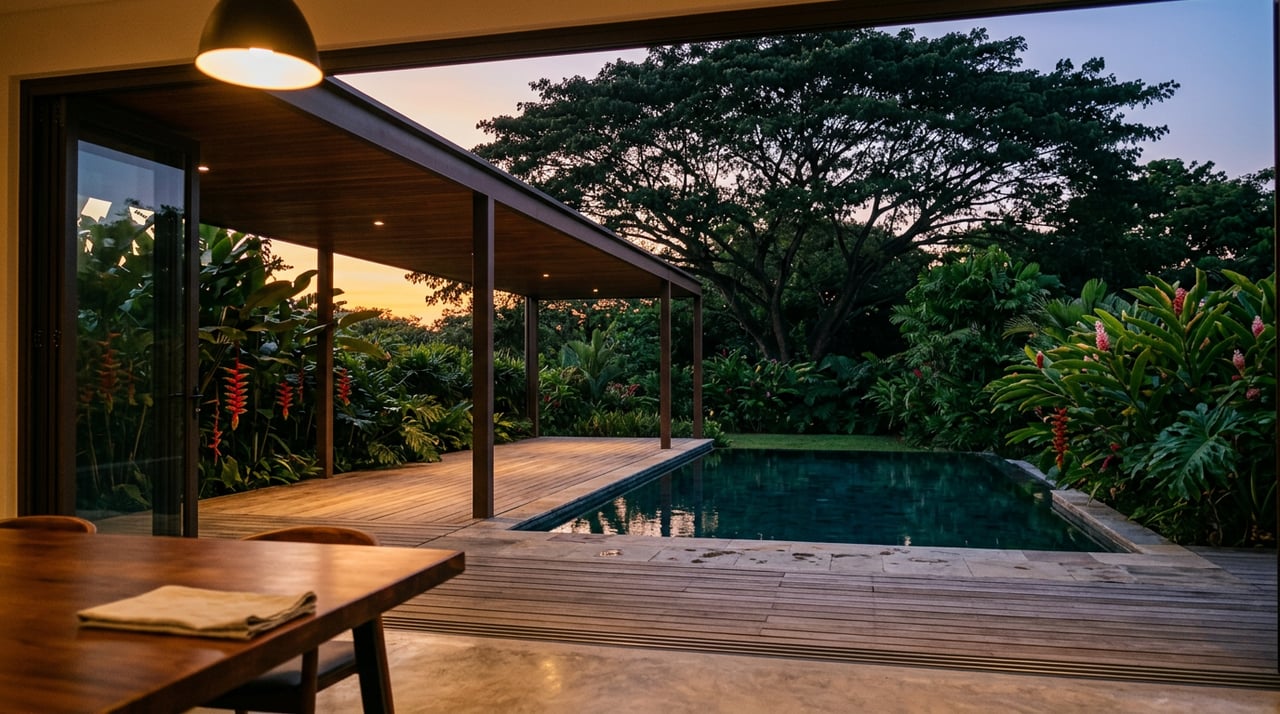
Rancho belongs to The Vessyl, the wellness resort that opened on the edge of La Fortuna this past July. The property was built by Josh Stanley, a co-founder of Charlotte's Web, in partnership with AKEN Hotels & Resorts, and most of the coverage it's gotten since opening has focused on its sound-therapy dome and its sweat lodge rather than its dining room. Forbes treats the kitchen as central to the same idea. Chef Delvi Saul Mendoza runs a breakfast service with Arenal rising behind the infinity pool, and the restaurant takes reservations from people who aren't staying on the property.
Fifteen minutes away, Don Rufino has been doing the opposite kind of work for over twenty years. The restaurant occupies a former cantina in the center of town and is run by chef Santiago Fernández Benedetto alongside his three siblings, who named the place after their grandfather, one of the area's early settlers. Benedetto apprenticed at Le Chandelier in San José at fifteen and has spent his career since building menus around what he grew up eating rather than technique for its own sake. His grandmother's chicken dish, built on coffee and chocolate, sits on the tasting menu next to snook roasted in banana leaf and octopus paired with Blue Zone sweet potato.
Chandra sits at the far end of the spectrum from both. There's one table, ten seats, and no printed menu. Guests arrive for a welcome drink, take a self-guided walk along a path the property calls the Trail of Senses, then come back to a seven-course dinner that changes every night. The kitchen leans on Costa Rican comfort food with Mediterranean and Ayurvedic touches, and the people who run it say the menu takes its cues from the lunar cycle.
The Ingredient List Doing the Heavy Lifting
Read across all three menus and the same handful of ingredients keeps showing up: heart of palm from San Carlos, blue corn, culantro coyote, sweet potato from the Nicoya region. None of these are rare or difficult to find here. They're what shows up at the Friday feria, the weekly farmers market that runs near the soccer field in town, where a pound of camote or a slab of fresh mountain cheese costs a fraction of what a plate built from the same ingredients costs at Don Rufino or Rancho.
That's the part of the Forbes story that matters most if you already live here. The ingredients making national food writers pay attention aren't new to La Fortuna. What's new is that three kitchens at three different price points decided at the same moment that local product was the more interesting story to tell, instead of importing something to signal quality the way resort towns used to.
What This Actually Changes on a Tuesday Night
If your default answer to visiting family has been a steak place with a volcano view, you now have three genuinely different ways to change that answer depending on the night and the group. A weeknight breakfast at Rancho gets you the volcano view plus a kitchen that's putting real thought into what's on the plate, and you don't need to be a guest at The Vessyl to get a table. A milestone dinner still points toward Don Rufino, where two decades of consistency and a five-course regional tasting menu make the case better than a newer place could. And if you've got out-of-town guests who want a story to tell when they get home, Chandra is the one that delivers an actual evening, not just a meal, assuming you can get one of the ten seats.
What ties the three together is worth remembering the next time someone asks where to eat in La Fortuna. The honest answer used to require an asterisk about the view. It doesn't anymore.
This kind of local texture, the restaurants residents actually choose between and the ingredients that end up on both a $12 casado plate and a five-course tasting menu, is the same kind of ground-level knowledge our advisors bring to conversations about property in Arenal and across Costa Rica's interior and coastal markets. If you're weighing a move here, building in the region, or just curious what a home near La Fortuna actually costs to hold onto, the team at Engel & Völkers Costa Rica is glad to talk it through.