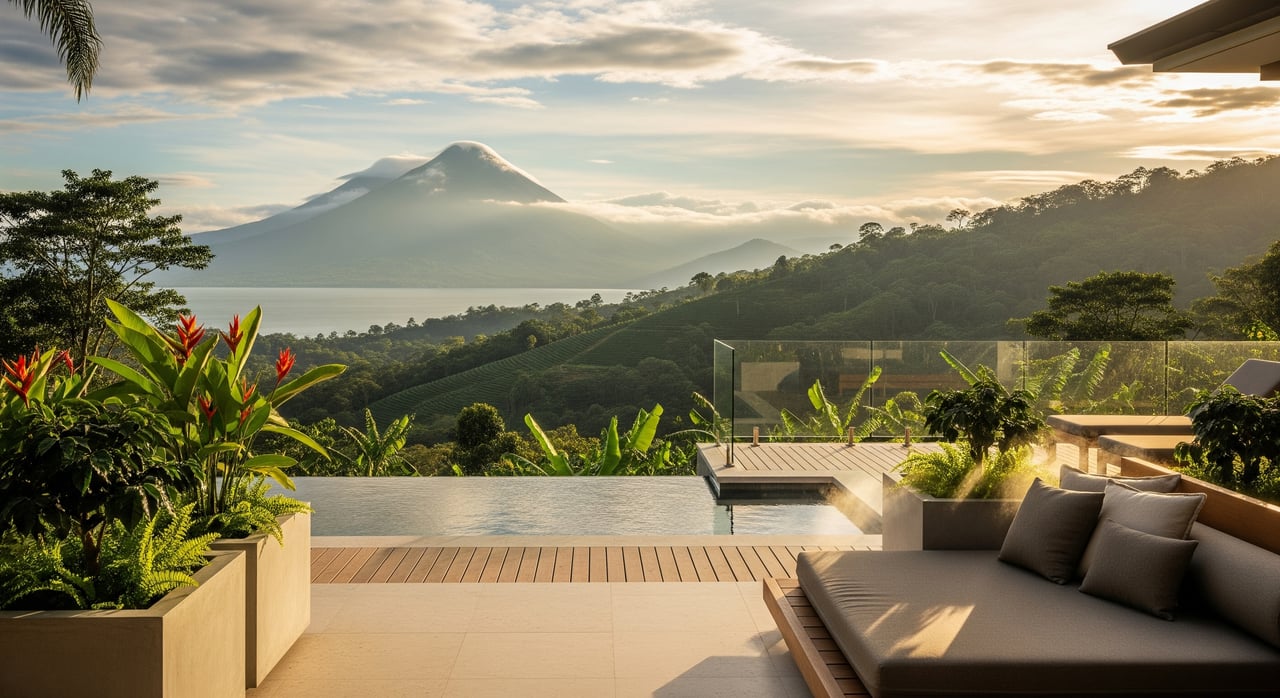
One mile around Lake Arenal can feel like a different country. You might tour a sunny, breezy lakeside home in the morning, then visit a humid, still valley property after lunch and wonder how both can share the same zip code. If you are comparing homes in San Carlos and the Arenal basin, understanding microclimates is the key to daily comfort, energy planning and long-term maintenance. This guide explains what drives those differences, what it means for your lifestyle and budget, and how to choose the right site with confidence. Let’s dive in.
Microclimates shape daily life
Elevation changes
Temperature tends to drop as you go uphill. A practical rule of thumb is the standard environmental lapse rate of about 6.5°C per 1,000 meters of elevation. In the Arenal area, that means higher slopes toward the Tilarán range often feel cooler and a bit less humid than the La Fortuna valley floor and low lakeshore areas.
Steep terrain and orographic rain
Humid trade winds rise over the volcano and ridges, creating orographic clouds and heavy rain on windward slopes. Sheltered valleys and some leeward pockets can be noticeably drier and sunnier. Two nearby properties can have very different cloud cover and rainfall totals because of slope and exposure.
Lake Arenal effects
Large water surfaces moderate temperature and elevate near‑shore humidity. The lake also drives daily breezes as land warms and cools, which is why many lakeshore sites see stronger afternoon winds and smaller day‑night temperature swings.
Daily and seasonal winds
Afternoon winds are common in the basin, especially on exposed lakeshores and ridge tops. Forested pockets and coves can be calmer. Expect a pronounced difference between the dry season (roughly December to April) and wet season (roughly May to November) in both wind feel and cloud frequency.
Volcanic presence
Arenal Volcano shapes local topography, soils and cloud formation. For present-day hazard status and maps, check official monitoring agencies before you buy. Local zoning and insurance options may consider volcanic history.
Zone-by-zone feel in San Carlos
La Fortuna and valley floor
- Warmer and more humid overall, especially at night.
- Often calmer than ridges, so you may rely more on fans or dehumidification.
- Lush gardens thrive, but you will watch mold, paint wear and pests closely.
- Interior brightness varies with cloud cover. Plan for ventilation and moisture control.
Lake Arenal shores
- Sunnier midday windows with regular afternoon winds on exposed sites.
- Near‑shore humidity is higher, and exterior finishes may weather faster.
- Breezes improve passive cooling and can help with insects.
- Solar can perform well with good sun exposure, but plan for rainy season variability.
Tilarán slopes and ridgelines
- Noticeably cooler with lower humidity than the valley floor.
- Wind exposure is higher, which supports natural ventilation but demands wind‑resistant construction.
- Daylight can be softer if you are on a windward, cloud‑prone slope.
- Gardens can favor temperate ornamentals and certain crops that like cooler nights.
Comfort and indoor climate
Temperature and humidity
If you prefer cooler evenings and simpler passive comfort strategies, higher elevations can be a fit. If you love warm mornings and tropical gardens, valley and lakeshore homes deliver that, but you will budget for dehumidifiers or targeted AC.
Wind and ventilation
Exposed lakeshore and ridgeline properties ventilate naturally, which reduces cooling demand. Design details matter in these locations. Incorporate screened openings that shed wind‑driven rain, and ensure doors and windows are rated and well anchored. In calmer valleys, plan for ceiling fans and mechanical ventilation to manage humidity.
Cloud cover and daylight
Cloud‑prone windward slopes have softer light and fewer direct sun hours. Orientation, roof overhangs, and light wells keep interiors bright. Sun‑exposed sites can be brilliant inside, which is great for mood and solar, but you will manage UV and glare with shading.
Energy and solar potential
Solar PV and hot water
Arenal’s proximity to the tropics offers a good solar resource overall. Cloudy and stormy wet‑season days reduce output, so production estimates must reflect local irradiance and shading. For fixed‑tilt arrays, installers often use a tilt near the local latitude of roughly 9 to 11 degrees. In windier zones, mounting and structural design should prioritize load resistance.
Micro‑wind considerations
Parts of Lake Arenal are known for strong, consistent winds. Residential wind turbines are not one‑size‑fits‑all. If you are considering micro‑wind, a site‑specific assessment and structural review are essential before committing.
Maintenance, durability and pests
Rain and drainage
Heavy wet‑season downpours stress roofs, gutters and site drainage. Look for a steep roof pitch, durable roofing, sealed penetrations and continuous gutters that are screened to keep debris and mosquitoes out. Ensure water exits the site cleanly.
Humidity and materials
High humidity accelerates mold and wood rot, and it shortens the life of paints and caulks. Moisture‑resistant materials, cross‑ventilation and planned dehumidification are smart in low, wetter areas. Regular cleaning and maintenance will protect finishes.
Corrosion and hardware
Exposed lakeshore and humid valley sites see faster corrosion. Stainless or coated fasteners and corrosion‑resistant metals extend the life of railings, hinges and roof components.
Pests
Termites, ants and mosquitoes respond to standing water, vegetation and humidity. Expect year‑round mosquito control in lower, wetter zones and for any property with rainwater catchment. Preventive termite treatments and routine inspections are good practice everywhere.
Infrastructure, access and hazards
Water and septic
Rural properties may draw from municipal systems, local wells or rainwater harvesting. Heavy rains can interrupt municipal service, so storage and filtration matter. Most rural homes use septic systems, and high water tables or heavy rains may warrant raised systems or package treatment. Inspect before you buy.
Roads and access
Unpaved or steep roads are common. In the wet season, you will watch for ruts, drainage failures and slip areas. Budget for periodic maintenance.
Landslides, flood and seismic context
Steep slopes, deforested cuts and poor drainage increase landslide risk in heavy rains. River courses and lake inlets can flood during extreme events. Costa Rica is seismically active, so earthquake‑resistant design and adherence to local code are relevant in every micro‑zone.
Site‑selection checklist
What to observe on site
- Visit multiple times: early morning, late afternoon, a wet‑season day and a dry‑season day.
- Wind: note direction and strength at midday and late afternoon. Ask neighbors what is typical.
- Sun: track shade from hills and trees at midday and late afternoon to understand solar potential.
- Drainage: after rain, look for ponding, saturated soils, erosion and the condition of culverts and retaining walls.
- Building envelope: check for stains, mold, peeling paint, window and door seals and sagging gutters.
- Vegetation and pests: look for termite tubes, ant activity and standing water.
Which professionals to hire
- Geotechnical or soil engineer for steep sites and new builds.
- Structural inspector with wind and moisture experience.
- Drainage and retaining wall engineer where cut‑and‑fill is present.
- Water system and septic inspector. Include water quality testing for wells or catchment.
- Solar and electrical specialist who uses local irradiance data and site shading.
- Local municipal review for zoning, setbacks, easements and any hazard designations.
Documents to request
- Photos or records showing any flooding, landslides, ashfall or roof repairs.
- Utility and service logs, including water interruptions and road maintenance.
- Recent geotechnical, structural or drainage reports.
- Permits for additions, terracing or retaining walls.
Design and retrofit tips
- Roofing: choose a steeper pitch with durable coverings, and ensure roof anchoring suits local wind exposure. Install full guttering with debris screens and mosquito guards.
- Ventilation: design for cross‑breezes on windy sites and add ceiling fans and dehumidifiers in calm, humid zones. Use quality screens on all openings.
- Materials: select rot‑resistant woods, stainless or coated metals, and UV‑stable paints and sealants for exposed exteriors.
- Foundations: consider raised floors or waterproofing where water tables are high or seasonal flooding occurs.
- Solar: locate panels on the least shaded surface, optimize for wind loads and plan conservatively for cloudier months. Batteries or grid‑tied systems can smooth interruptions.
- Landscaping: use native plants, maintain defensible space where appropriate and design for erosion control with terraces, swales and groundcover on slopes.
Insurance and due diligence
Availability and cost of homeowners insurance can vary by volcanic, landslide and flood exposure. Ask local brokers about coverage, exclusions and riders for ashfall or geological hazards. Confirm boundaries, easements and any conservation or setback rules before you go firm on a contract.
Where to verify data
- Instituto Meteorológico Nacional for weather station records and seasonal norms.
- OVSICORI‑UNA for current volcanic status, hazard maps and historical activity.
- Comisión Nacional de Emergencias for disaster and hazard mapping.
- SINAC and MINAE for protected areas and land use restrictions.
- Municipalidad de San Carlos and district offices for permits, zoning and road maintenance.
- Local utilities and water cooperatives for service reliability and source details.
- Qualified local PV installers, structural engineers and geotechnical firms for site‑specific studies.
Make your short list
Think about your lifestyle first. If you want cool nights and breezy terraces, look up‑slope. If you prefer warm mornings by the water and strong afternoon winds, explore exposed lakeshore sites. If you are drawn to lush gardens and easy access to La Fortuna amenities, the valley’s warmth and humidity may work well with the right ventilation plan.
No matter your preference, validate it on site. Visit at different times, ask neighbors about daily wind patterns, and test drainage after rain. Commission targeted inspections and review official hazard data before you finalize an offer. That approach protects comfort, energy performance and long‑term value.
Ready to compare properties across San Carlos and the Arenal basin with confidence? Let a trusted advisor coordinate tours across micro‑zones, line up the right inspections and help you balance views, comfort and durability. Start a conversation with Dawn Wolfe to explore your options.
FAQs
What is a microclimate in Arenal?
- It is a localized climate pattern created by elevation, terrain, the lake and daily winds that cause nearby properties to have different temperature, humidity, cloud and wind conditions.
How does elevation affect home comfort?
- Higher sites are generally cooler and less humid, which reduces the need for AC or dehumidifiers. Lower valleys feel warmer and may require more ventilation and moisture control.
Are lakeshore homes too windy?
- Many lakeshore and ridge sites see strong afternoon winds. With wind‑rated windows, anchored roofing and thoughtful outdoor design, most owners find the breezes improve comfort.
Is solar power viable around Lake Arenal?
- Yes, with site‑specific modeling. Sun‑exposed roofs perform well, but wet‑season clouds reduce output. Use local irradiance data and plan tilt and mounting for wind loads.
What maintenance should I expect in the wet season?
- Regular gutter cleaning, roof inspections, drainage checks and mold control. Use moisture‑resistant materials and maintain screens to limit insects and debris.
Do I need special insurance for volcanic hazards?
- Some policies exclude ashfall or geological hazards without riders. Ask local brokers about coverage options and review official hazard information before binding a policy.
Is building on a steep slope safe in San Carlos?
- It can be when engineered correctly. Hire geotechnical, structural and drainage experts to design foundations and retaining systems rather than relying on a visual check.